Published on April 12, 2026
How Parking Invoices Work and How to Handle Them
Parking invoices can be simple or messy. We explain how they work, common mistakes, and a practical way to manage them.
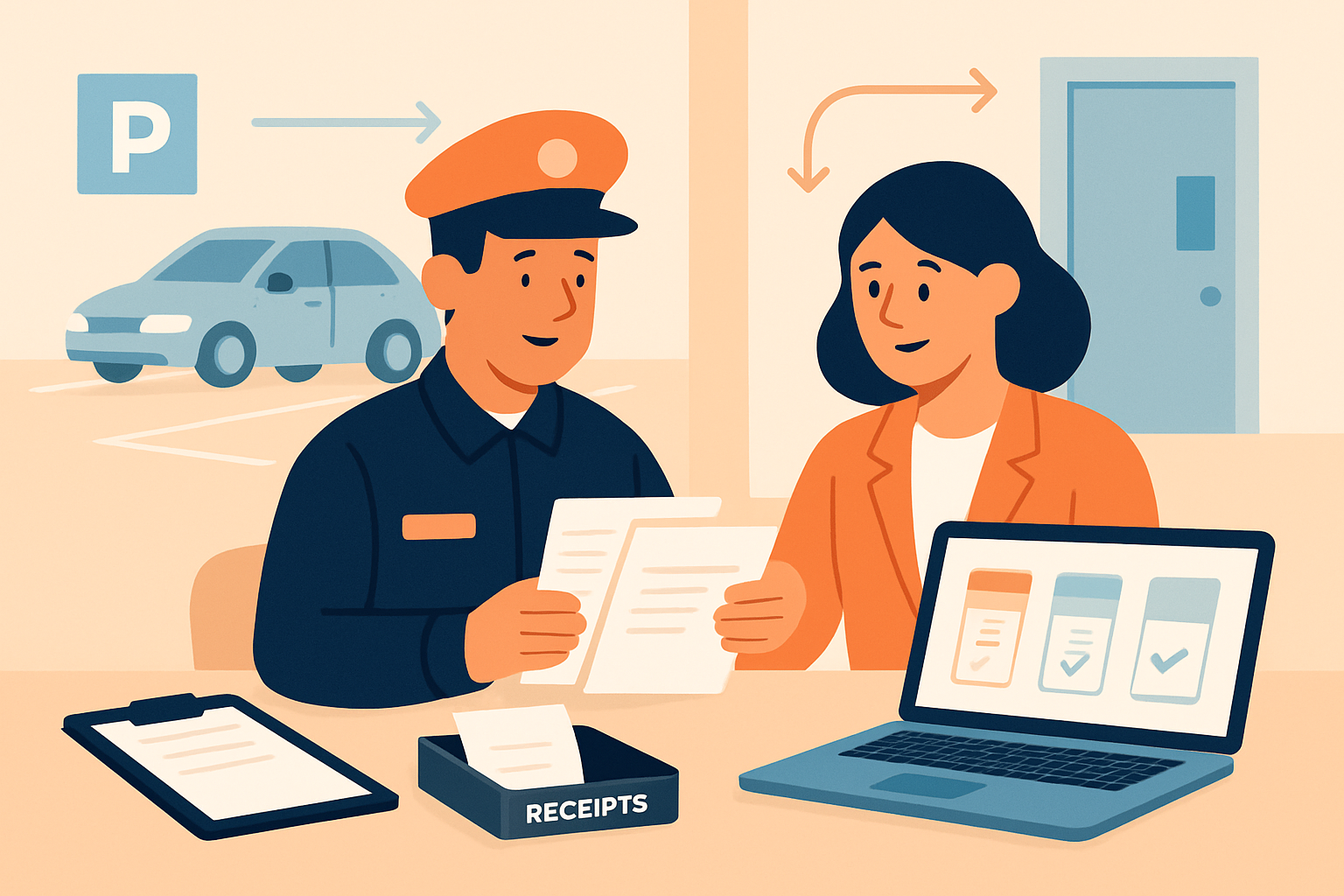
Parking invoices can seem simple at first, but they often create avoidable delays, disputes, and manual follow-up when we do not handle them with a clear process. Whether we manage a single lot, multiple locations, or recurring billing for parking access, the way we issue, review, and collect these invoices directly affects cash flow and customer experience.
In practice, parking invoices are more than a payment request. They reflect usage, pricing rules, service terms, and accountability. When we build a reliable workflow around them, we reduce errors, speed up collections, and make it easier to track who owes what and why. That matters for operators, property managers, and service teams that need practical results without adding unnecessary admin work.
In this article, we break down how parking invoices work, where common mistakes happen, and how to handle them with a step-by-step approach that saves time and protects revenue. We also look at what effective invoicing looks like in real situations so we can focus on methods that actually work.
Key Takeaways
- Parking invoices should clearly show who parked, where, when, and why the charge applies.
- Common mistakes include missing vehicle details, unclear rates, and weak approval or collection steps.
- A simple review-and-issue workflow helps reduce disputes and speeds up payment.
- Consistent invoice records make it easier to track expenses, reimbursements, and revenue.
What parking invoices mean today and why they matter
Parking invoices are the billing records we use to document parking charges, whether they come from a garage, a meter, a permit system, a valet service, or a private lot. In practice, they do more than confirm a payment. They show what was charged, when the parking occurred, who used the space, and why the expense belongs in a business record. That makes them important for both day-to-day expense tracking and cleaner accounting.
When we handle parking invoices well, we reduce confusion and save time later. A clear invoice helps us match a charge to the right trip, employee, client visit, or project. It also gives us a reliable paper trail if we need to review spending, reimburse an employee, or answer a question from accounting. Without that detail, parking costs can get lost in card statements or mixed into general travel expenses.
Today, parking invoices matter because parking is often part of a larger workflow. We may pay for parking before a meeting, after a delivery, or during a service call, and the charge may appear in different formats depending on the provider. Some invoices are simple receipts. Others include tax, location details, vehicle information, or reference numbers. The more organized the invoice, the easier it is for us to process it correctly.
For practical results, we should look for a few key details on every parking invoice:
- Date and time of the parking session
- Location or facility name
- Amount charged, including taxes or fees
- Payment method or transaction reference
- Purpose or business context, when needed
These details help us decide whether the charge is billable, reimbursable, or simply a business expense to record. They also make it easier to spot duplicate charges, missing receipts, or incorrect amounts before they become accounting problems. If we manage invoices in one place, the process becomes even smoother because we can connect the parking charge to the right client, job, or expense record without extra manual work.
In short, parking invoices matter because they turn a small, routine expense into a traceable business record. When we treat them as part of a structured workflow, we improve accuracy, speed up reconciliation, and keep our financial records easier to trust.
How to evaluate parking invoices without common mistakes
When we evaluate parking invoices, we need to verify more than the total due. Small billing errors can hide in rate changes, duplicate sessions, missed validations, or fees that were never approved. A quick review process helps us catch those issues before they turn into recurring waste.
We start by matching each invoice to the original parking record. That means checking the date, location, vehicle, permit, stall, and duration against receipts, logs, or access data. If the invoice is for a monthly space, we confirm the contract terms, billing cycle, and any changes in occupancy or service level. If it is for transient parking, we look for the exact entry and exit times and make sure the rate matches the posted or agreed pricing.
To avoid common mistakes, we focus on a few high-risk areas:
- Duplicate charges: the same session, permit, or monthly space billed more than once.
- Incorrect rates: a higher hourly, daily, or monthly rate than the agreement allows.
- Unauthorized fees: service charges, late fees, or administrative costs that were not approved.
- Missing credits: refunds for canceled reservations, early exits, or unused time that were never applied.
- Tax and rounding errors: small calculation issues that add up across many invoices.
We also compare the invoice against the expected budget category. Parking tied to client work, employee travel, or facility operations should be coded consistently so we can track spend accurately. If the invoice lacks a clear reference number or project code, we flag it immediately instead of guessing. That keeps our records clean and makes later audits much easier.
Another useful step is to confirm whether the invoice reflects the right billing model. Some parking providers bill by session, others by permit, and some use consolidated monthly statements. When the format changes, errors are easier to miss. We review line items one by one, then compare the total against prior invoices to spot unusual spikes or patterns that need explanation.
Finally, we document any discrepancy before we approve payment. A short note explaining what we found, what we corrected, and who approved the change helps prevent repeat issues. If we handle parking invoices through a centralized workflow, we can move faster, reduce manual follow-up, and keep approvals tied to the right records.
Step-by-step framework to implement parking invoices
To implement parking invoices effectively, we need a process that is simple enough for daily use and strict enough to prevent revenue leakage. The goal is not just to send a bill, but to create a repeatable workflow that captures the right details, routes the invoice to the