Published on April 12, 2026
Invoice Example: Real Samples for Small Business
Invoice example guide for small businesses with real sample structure, key fields, and practical tips to bill clients clearly.
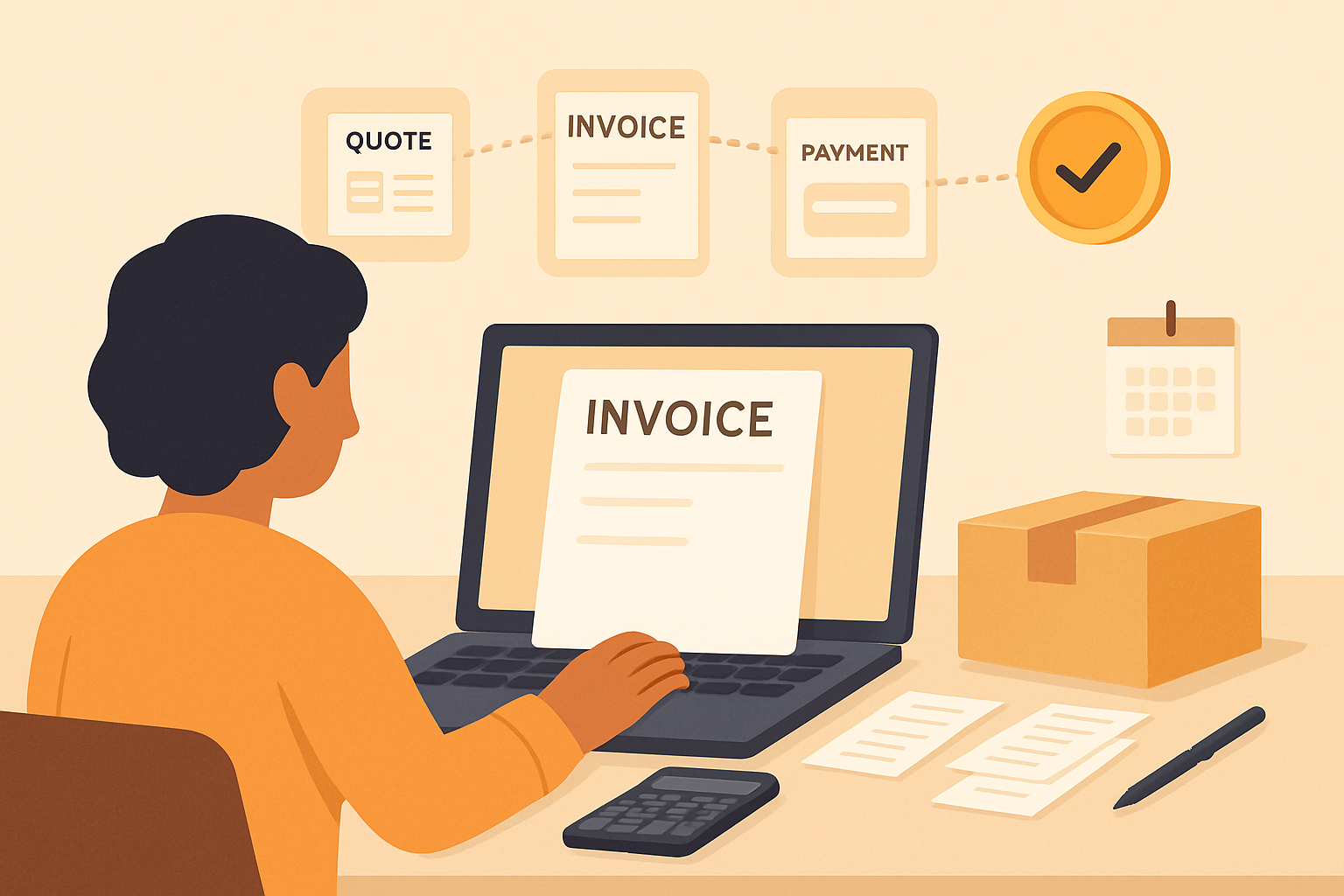
An invoice example gives us a clear model for billing clients accurately, presenting charges professionally, and getting paid on time. When we can see how a complete invoice is structured, we reduce mistakes, speed up approvals, and make our business look more organized.
In this article, we will break down what a strong invoice should include, how different invoice formats work for small businesses, and how we can adapt a sample to fit our own services. We will also look at practical details such as payment terms, line items, taxes, and branding so our invoices are easier for clients to understand and act on.
Whether we bill for services, products, or project-based work, a well-built invoice helps us communicate value and keep cash flow moving. By using a simple reference format, we can save time, avoid back-and-forth questions, and create a smoother payment experience for every client.
Key Takeaways
- A complete invoice example should include seller and client details, a unique invoice number, dates, line items, totals, and payment terms.
- Clear formatting helps clients understand what they owe, reduces questions, and speeds up approval and payment.
- Different invoice types for services, products, and projects need slightly different line-item details, but the core structure stays the same.
- Simple best practices like consistent branding, itemized charges, and clear due dates make invoicing easier to manage and more professional.
Invoice Example: What a Complete Small Business Invoice Includes
When we review an invoice example for a small business, we want to see every detail that helps the customer understand what they owe and why. A complete invoice should do more than request payment. It should clearly identify the seller, the buyer, the work completed, the amount due, and the payment terms. When these details are organized well, we reduce confusion, speed up approvals, and make it easier to get paid on time.
At a minimum, a small business invoice should include the business name, contact information, and mailing address. It should also show the customer’s name and billing details so the invoice is tied to the correct account. We also recommend adding a unique invoice number, the issue date, and the due date. These fields help us track each invoice and make follow-up easier if payment is delayed.
The line-item section is where the invoice becomes specific. We should list each product or service separately, along with the quantity, rate, and line total. If we charge by project, we can describe the deliverable clearly enough that the customer understands what was completed. If we charge by hour, we should include the number of hours worked and the hourly rate. Clear line items reduce disputes and support faster approval.
A strong invoice also includes the financial summary. This usually means subtotal, discounts if applicable, taxes, and the final amount due. If we accept partial payments, deposits, or retainers, we should show those amounts clearly as well. The payment section should explain how the customer can pay, whether by bank transfer, card, check, or another method, and it should include any instructions needed to complete payment.
To make an invoice example truly useful, we should also include notes when needed. This can cover late fees, refund terms, project milestones, or a thank-you message. A short note can prevent misunderstandings and keep the tone professional. When we use a consistent format across all invoices, we create a smoother billing process and a more reliable customer experience.
- Business details: name, address, email, and phone number
- Customer details: billing name and address
- Invoice identifiers: invoice number, issue date, due date
- Line items: description, quantity, rate, and total
- Totals: subtotal, tax, discounts, and amount due
- Payment terms: accepted methods and due instructions
- Notes: late fees, special terms, or additional context
When we build invoices with these elements in place, we make the document easier to read and easier to pay. That is the foundation of a professional billing process, whether we send one invoice a month or manage dozens each week.
How to Format an Invoice for Clear Payment Expectations
When we format an invoice for clear payment expectations, we make it easy for the client to understand what they owe, why they owe it, and when payment is due. A strong invoice example should not leave room for guesswork. It should guide the reader from the top of the page to the final total with a simple, logical structure.
We usually start with the business name, contact details, and invoice number at the top. Then we include the client’s name and billing information, the invoice date, and the payment due date. These details help both sides track the transaction and reduce back-and-forth questions later.
Next, we list the services or products in a clear line-item format. Each line should show what was provided, the quantity, the rate, and the line total. When possible, we keep descriptions specific enough to avoid confusion but short enough to scan quickly. For example, instead of writing a vague service label, we can name the exact task, project phase, or deliverable.
To make payment expectations even clearer, we include the following elements:
- Total amount due with taxes, discounts, or fees shown separately
- Payment terms such as due on receipt, net 15, or net 30
- Accepted payment methods so the client knows how to pay
- Late fee policy if we plan to charge one
- Remittance instructions if payment needs to be sent to a specific account or address
We also recommend placing the payment due date in more than one spot if the invoice layout allows it. That small step can improve visibility and reduce missed deadlines. If we offer partial payments or deposits, we should state those terms clearly as well so the client understands what is expected before work begins or before final delivery.
Formatting matters just as much as the information itself. We keep the layout clean, use consistent spacing, and avoid cluttered blocks of text. A simple design helps the client find the most important details fast, especially on mobile devices or when invoices are reviewed in a hurry.
When we build invoices this way, we create a smoother payment process and fewer delays. A well-structured invoice example does more than request money; it