Published on April 12, 2026
Invoice Format: Best Practices and Examples
Invoice format best practices help us create clearer bills, reduce errors, and get paid faster with less back-and-forth.
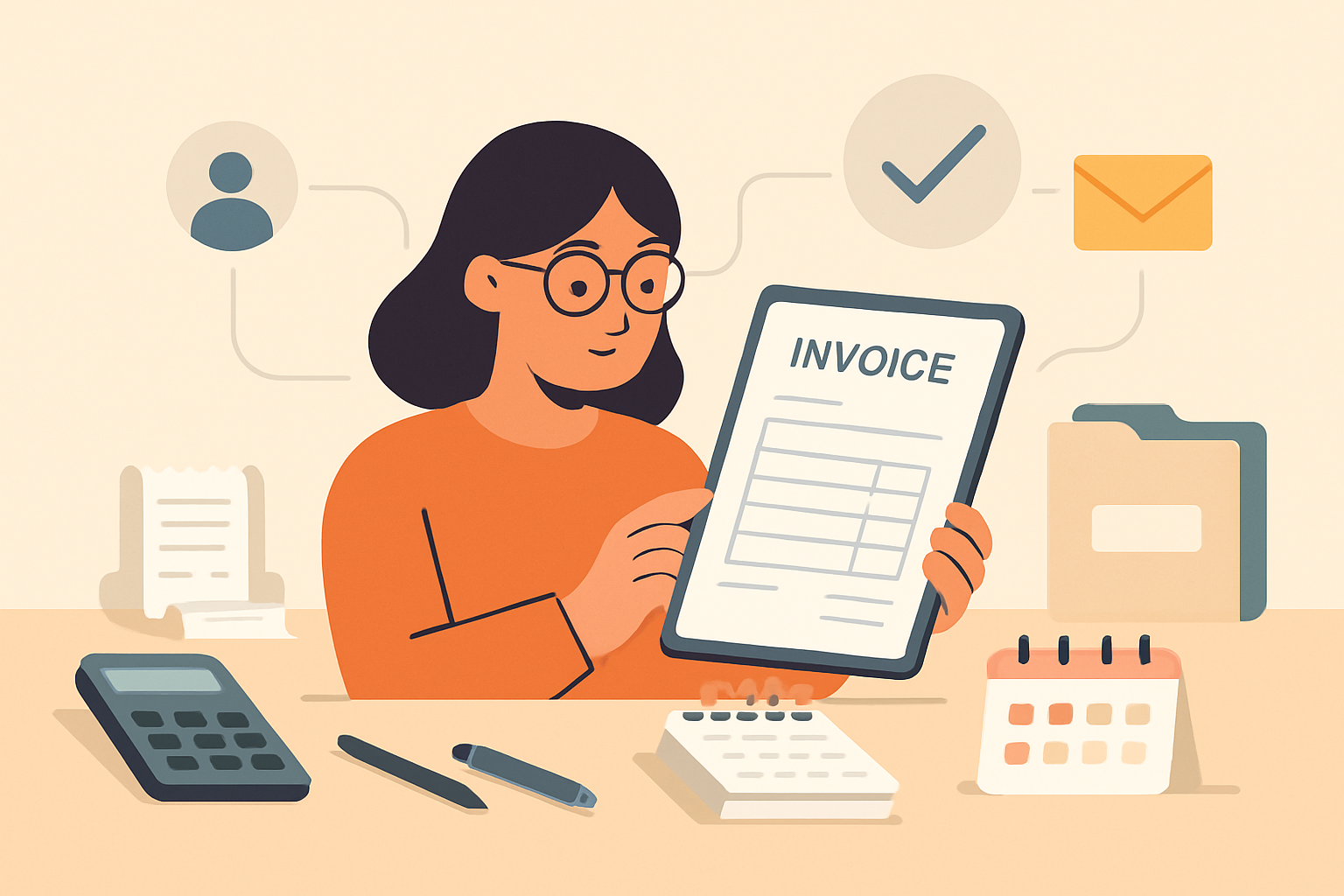
An effective invoice format does more than list charges. It helps us present our work clearly, reduce billing errors, and make it easier for clients to pay on time. When we use a consistent structure, we create a smoother experience for both our team and our customers.
In this article, we will break down the best practices for building a professional invoice format, explain the key elements every invoice should include, and share practical examples that can help us improve clarity and speed up collections. Whether we bill for services, products, or recurring work, a strong format supports better cash flow and fewer follow-up questions.
Key Takeaways
- A clear invoice format helps us reduce errors, answer fewer billing questions, and get paid faster.
- Every professional invoice should include business details, client details, invoice number, dates, line items, totals, and payment instructions.
- The best invoice formats are easy to scan, consistent across jobs, and tailored to the type of work we bill.
- Service, product, and recurring invoices each benefit from slightly different layouts, but all should stay simple and transparent.
What Every Professional Invoice Format Should Include
A professional invoice format should make it easy for clients to understand what they owe, why they owe it, and how to pay. When we keep the layout clear and consistent, we reduce back-and-forth questions, speed up approvals, and improve the chances of getting paid on time.
At a minimum, every invoice should include the following details:
- Business information: our company name, address, email, phone number, and logo if we use one.
- Client information: the customer’s legal name, billing address, and any reference number they require.
- Invoice number: a unique identifier that helps us track each invoice and avoid confusion.
- Invoice date: the date we issue the invoice, which helps establish the payment timeline.
- Due date: the exact date payment is expected, not just a vague term like “net 30” without context.
- Line items: a clear list of products or services, quantities, unit prices, and line totals.
- Subtotal, taxes, discounts, and fees: a transparent breakdown of all charges before the final total.
- Total amount due: the final number the client needs to pay.
- Payment instructions: accepted payment methods, bank details or payment link, and any remittance notes.
- Terms and notes: late fee policy, refund terms, project references, or any other relevant instructions.
We should also make sure the invoice format is easy to scan. That means using clear headings, enough white space, and a logical order that moves from sender and client details to billing details and payment instructions. If the invoice is hard to read, clients may delay payment simply because they need time to interpret it.
Consistency matters just as much as completeness. When we use the same invoice format for every client, we create a predictable process for our team and a more professional experience for customers. This also makes it easier to compare invoices, track outstanding balances, and spot errors before they become payment issues.
For teams that want to reduce manual work, a centralized invoicing workflow can help keep client details, quotes, and collections aligned in one place. Tools like ZenInvoice can support that process by making it easier to create accurate invoices and follow a consistent format every time.
Invoice Format Best Practices for Clearer Billing
When we improve our invoice format, we make it easier for clients to understand what they owe and easier for us to get paid on time. A clear layout reduces back-and-forth questions, supports faster approvals, and helps us present our business as organized and reliable. The goal is not to add more detail than necessary, but to place the right details in the right order.
We should start with the essentials at the top of the invoice: business name, client name, invoice number, issue date, and due date. These fields help both sides identify the bill quickly and track it accurately. From there, we can move into the service or product details, making sure each line item is easy to scan. A simple table works well because it separates descriptions, quantities, rates, and totals without clutter.
To keep the billing process smooth, we should use consistent labels and formatting across every invoice. That means using the same terms for payment due dates, taxes, discounts, and balance due. Consistency helps clients know exactly where to look, and it also makes our internal records easier to manage. If we send recurring invoices, a standardized layout saves time and lowers the chance of errors.
What to include in a strong invoice layout
- Clear header information: business name, contact details, and logo if we use one.
- Unique invoice number: a simple reference system for tracking and follow-up.
- Client details: the correct billing contact and company name.
- Itemized charges: descriptions, quantities, unit prices, and line totals.
- Payment terms: due date, accepted payment methods, and late fee terms if applicable.
- Total amount due: a bold, easy-to-find final balance.
We also need to think about readability. Short descriptions, clean spacing, and a logical flow make the invoice easier to review on a phone or desktop. If we include notes, they should be brief and relevant, such as project references, partial payment instructions, or a thank-you message. Too much text can distract from the amount due.
Another best practice is to match the invoice format to the type of work we do. Service-based businesses may need space for hourly rates and project milestones, while product-based businesses may need more room for quantities and shipping details. The format should support the transaction, not force it into a structure that creates confusion.
When we use a consistent, client-friendly invoice format, we create a better payment experience and reduce administrative work. Tools like ZenInvoice can help us centralize invoice details, keep formatting consistent, and move from quote to collection with less manual effort.
Invoice Format Examples for Services, Products, and Recurring Work
When we build an effective invoice format, we should match the layout to the type of work being billed. A service invoice, a product invoice, and a recurring invoice all need the same core details, but the way we present those details can make the document easier to review, approve, and pay.
For service-based work, we usually focus on clarity