Published on April 12, 2026
Invoice Payment Terms: Best Practices Guide
Invoice payment terms help us set clear expectations, improve cash flow, and reduce late payments with every invoice.
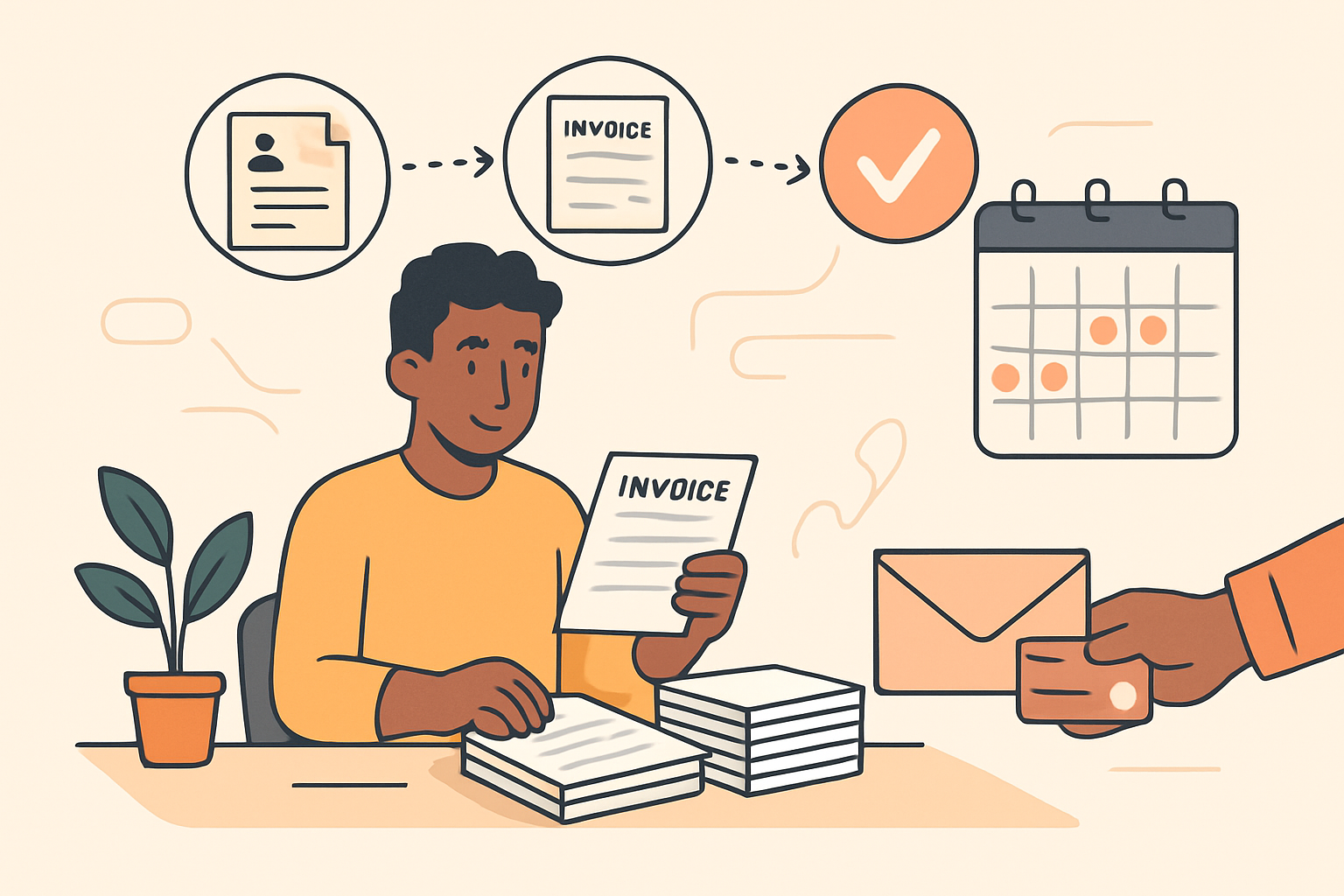
Invoice payment terms set the expectations that help us get paid on time, reduce confusion, and keep cash flow predictable. When we define terms clearly from the start, we make it easier for clients to understand when payment is due, what methods we accept, and what happens if a balance remains unpaid.
Strong payment terms do more than protect revenue. They also support better client relationships by removing ambiguity and creating a professional billing process. In this guide, we cover how to choose the right terms, communicate them effectively, and avoid common mistakes that can slow down collections.
Key Takeaways
- Clear invoice payment terms help us set expectations, speed up collections, and reduce disputes.
- The best terms balance cash flow needs with client relationships, using options like due on receipt, net 15, net 30, deposits, or milestone billing.
- Every invoice should state the due date, accepted payment methods, late fees, and any early payment incentives.
- Consistent communication and follow-up matter as much as the terms themselves when we want to reduce late payments.
How to Choose the Right Invoice Payment Terms for Your Business
When we choose invoice payment terms, we are setting the rules for how cash moves through our business. The right terms should support steady cash flow, fit the way we sell, and still feel reasonable to our clients. If we make the terms too short, we may create friction and slow approvals. If we make them too long, we may wait too long to get paid and strain operations.
We usually start by looking at three factors: the type of work we do, the size of the project, and how predictable our client relationships are. For recurring services or smaller jobs, shorter terms can help us keep collections consistent. For larger projects or custom work, we may need milestone-based terms or partial upfront payment to reduce risk and cover early costs.
It also helps to match terms to our internal cash needs. If we pay vendors, contractors, or payroll on a tight schedule, we should avoid terms that push collections too far out. In those cases, we can use options like net 15, net 30, deposits, or progress billing to balance flexibility with faster payment.
We should also consider client expectations. Some industries commonly use specific terms, and aligning with those norms can make approval easier. At the same time, we should not default to whatever a client asks for if it creates cash flow problems for us. The goal is to find terms that are fair, clear, and sustainable.
A practical way to decide is to compare a few standard options:
- Due on receipt: Best for small jobs, new clients, or urgent cash flow needs.
- Net 15: Useful when we want faster payment without sounding overly aggressive.
- Net 30: A common choice for many B2B relationships and service businesses.
- Net 45 or net 60: Better for larger accounts, but only if our cash reserves can support the delay.
- Deposit plus balance due: Helpful for custom projects, long timelines, or higher-risk work.
We should also make sure our terms are easy to understand and consistent across invoices, quotes, and contracts. Ambiguity creates disputes and slows collections. Clear language such as “50% due upfront, balance due upon completion” or “payment due within 15 days of invoice date” removes confusion and gives clients a clear deadline.
Finally, we need to review our payment terms regularly. If late payments are becoming common, we may need shorter terms, stronger reminders, or upfront deposits. If clients consistently pay early, we may have room to offer flexible terms for larger opportunities. The best invoice payment terms are the ones that protect our cash flow while keeping the buying process smooth for clients.
Invoice Payment Terms: What to Include in Every Invoice
When we define invoice payment terms clearly on every invoice, we reduce confusion, speed up approvals, and make it easier for clients to pay on time. The goal is to remove guesswork. Every invoice should tell the client exactly what they owe, when it is due, how they can pay, and what happens if payment is late.
We should include the payment due date in a format that is easy to understand, such as net 15, net 30, or due upon receipt. If we use net terms, we should also show the exact calendar date the payment is due. That small detail helps prevent disputes and gives clients a clear deadline to follow.
It also helps to state the accepted payment methods. We can list options such as bank transfer, credit card, ACH, or check, depending on what we support. If there are any processing fees, minimums, or restrictions, we should mention them upfront so clients are not surprised later.
We should also include late payment language. This does not need to sound harsh, but it should be specific. A simple note about late fees, interest charges, or paused work after a missed deadline sets expectations and encourages timely payment. If we offer an early payment discount, we should include that too, along with the exact terms required to qualify.
For clarity and consistency, every invoice should include these core elements:
- Invoice number for tracking and reference
- Issue date and due date
- Payment terms written in plain language
- Accepted payment methods
- Late fee or penalty policy, if applicable
- Contact information for billing questions
We should also make sure the terms match the contract, proposal, or quote the client approved. If the invoice says one thing and the agreement says another, payment delays are more likely. Consistency across documents builds trust and makes collections easier.
Finally, we should keep the wording simple. Clients should be able to scan the invoice and understand the terms in seconds. Clear invoice payment terms do more than support faster payment; they also create a more professional billing experience and reduce back-and-forth for everyone involved.
How to Communicate Payment Terms Clearly to Clients
Invoice payment terms work best when we communicate them early, consistently, and in plain language. We should not wait until the invoice is sent to explain when payment is due, how it should be made, or what happens if a payment is late. Instead, we can set expectations before