Published on April 12, 2026
Invoice vs Bill: What’s the Difference?
Invoice vs bill can be confusing, but the difference matters for payment timing, recordkeeping, and clearer business communication.
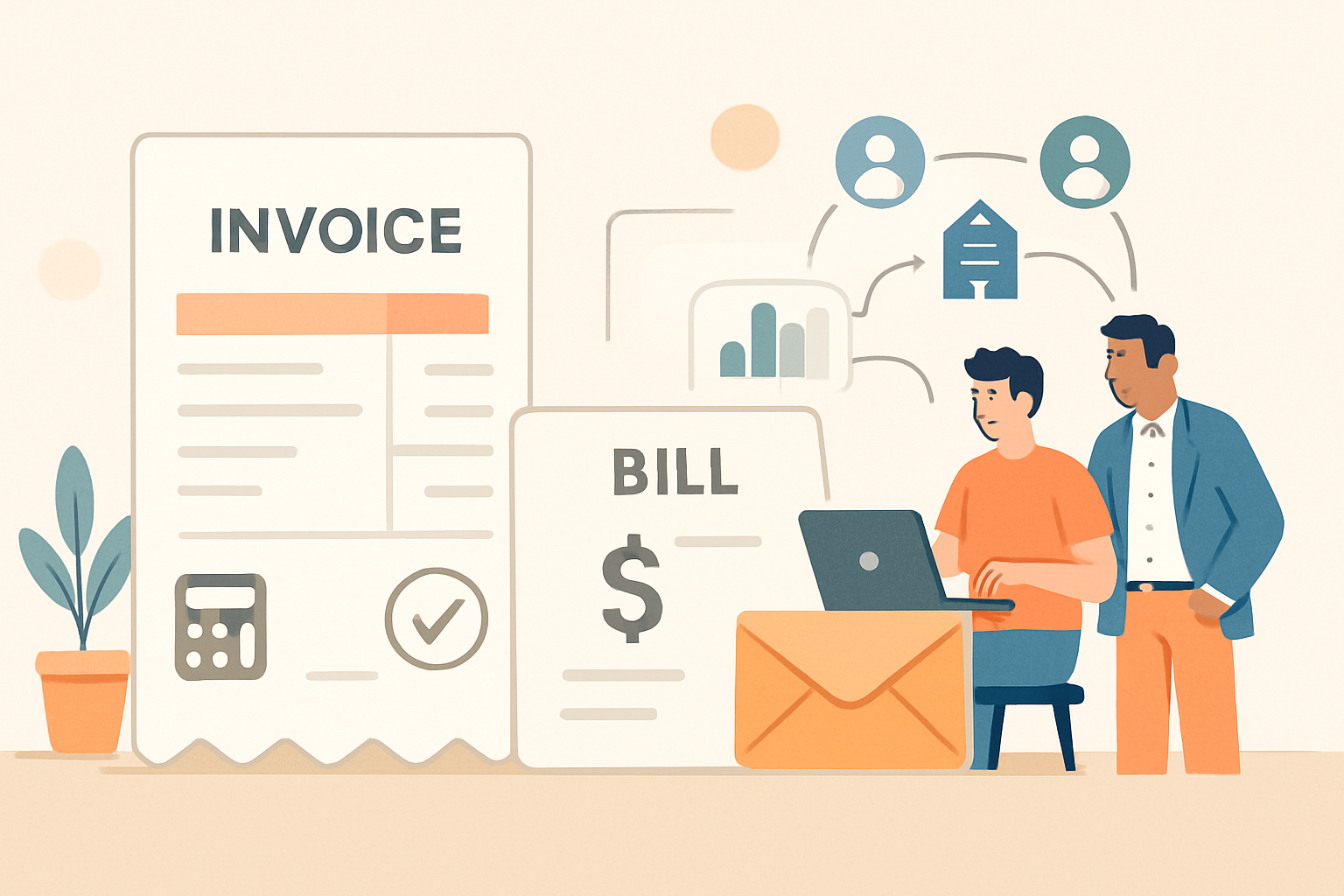
Invoice vs bill is a common comparison, but the two terms are not always used the same way. In everyday conversation, we may use them interchangeably, yet in business and accounting, each one can carry a different purpose, timing, and level of detail.
Understanding the difference helps us communicate more clearly with customers, vendors, and internal teams. It also helps us manage cash flow, track payments, and keep records organized. In this article, we will break down what each term means, when to use it, and why the distinction matters for businesses of all sizes.
Key Takeaways
- An invoice is a formal request for payment tied to a completed sale or service.
- A bill is usually the amount owed for goods or services, often used from the buyer’s perspective.
- Clear invoicing terms help us reduce confusion, track payments faster, and improve cash flow.
- Consistent billing records make it easier to reconcile accounts and follow up on overdue balances.
What an Invoice Means in Business
When we talk about an invoice in business, we mean a formal request for payment issued after we have delivered a product or completed a service. An invoice records what was sold, how much is due, when payment is expected, and the terms the buyer agreed to. In other words, it is not just a note asking for money; it is part of the financial record that helps both sides track the transaction clearly.
For most businesses, an invoice serves three important purposes:
- It confirms the sale. We document exactly what was provided, including quantities, rates, and totals.
- It sets payment expectations. We specify due dates, accepted payment methods, and any late fees or discounts.
- It supports accounting. We use invoices to track revenue, manage cash flow, and reconcile payments.
An invoice usually includes the seller’s and buyer’s contact details, an invoice number, issue date, line items, subtotal, taxes, total amount due, and payment terms. For service businesses, it may also include project milestones, hourly rates, or retainers. For product-based businesses, it often lists item names, unit prices, and shipping charges.
We should think of an invoice as a professional payment document that creates clarity and accountability. It helps reduce disputes because both parties can see what was agreed upon and what remains unpaid. It also gives us a reliable paper trail if we need to follow up on collections or review past transactions.
In day-to-day operations, a well-structured invoice can speed up payment because it makes the next step obvious. When clients know exactly what they owe and when it is due, they are less likely to delay. That is why many businesses use invoicing software to centralize billing details, automate reminders, and keep everything organized in one place.
What a Bill Means and When We Use It
When we talk about a bill, we usually mean a request for payment that arrives before or at the time of service. In everyday business, bills are common in situations where payment is expected quickly, such as utilities, subscriptions, retail purchases, or vendor charges. The key idea is simple: a bill tells us what we owe and asks us to pay it.
We often see bills in consumer and operational settings because they are designed for fast settlement. A restaurant check, a monthly internet statement, or a supplier charge can all function as bills. In each case, the seller is not waiting long for payment. Instead, the document supports immediate or near-immediate collection.
Here is how we can think about a bill in practical terms:
- It is usually issued before payment is due immediately or soon.
- It often reflects a completed purchase or ongoing service period.
- It is common in recurring or low-complexity transactions.
- It focuses on what we owe right now, not on future collection steps.
That is why the term invoice vs bill can be confusing. Both documents communicate an amount due, but a bill is typically more immediate and less formal in structure. An invoice, by contrast, is more often used in business-to-business transactions where payment terms, tracking, and follow-up matter more.
For teams managing cash flow, the distinction matters because it affects how we record, send, and follow up on payments. If we treat every charge like a bill, we may miss the structure needed for customer billing, aging reports, and collections. If we use the right document from the start, we reduce confusion and make payment expectations clearer.
In practice, we should use the word bill when the payment request is straightforward and immediate. That helps us communicate clearly with customers, vendors, and internal teams without adding unnecessary complexity.
Invoice vs Bill: Key Differences We Should Know
When we compare invoice vs bill, the key difference is perspective. An invoice is a request for payment sent by the seller after goods or services are delivered. A bill is the amount the buyer owes, usually viewed from the customer’s side. In practice, both documents communicate the same transaction, but they serve different roles in the payment process.
We can think of an invoice as a formal record that helps us track what was sold, how much is due, and when payment is expected. It often includes itemized services, quantities, rates, taxes, payment terms, and due dates. A bill is typically shorter and more direct, focusing on the amount owed and the expectation to pay. For example, a utility company sends a bill, while a consultant sends an invoice.
This distinction matters because it affects how we manage cash flow, accounting, and customer communication. Invoices are especially useful for businesses that need clear documentation, payment terms, and follow-up tracking. Bills are more common in consumer transactions where payment is expected quickly and the details are simpler.
- Invoice: Sent by the seller to request payment and document the sale.
- Bill: Received by the buyer as the amount due for a purchase or service.
- Common use: Invoices are standard in B2B and freelance work; bills are common in retail and utilities.
- Detail level: Invoices usually include more line-item and payment information.
Understanding the difference helps us choose the right document for each transaction and keep our records accurate. It also makes it easier to set expectations with clients and reduce confusion