Published on April 12, 2026
Invoice vs Receipt: When to Use Each
Invoice vs receipt: learn when to use each document so we can bill correctly, confirm payment, and keep records clear.
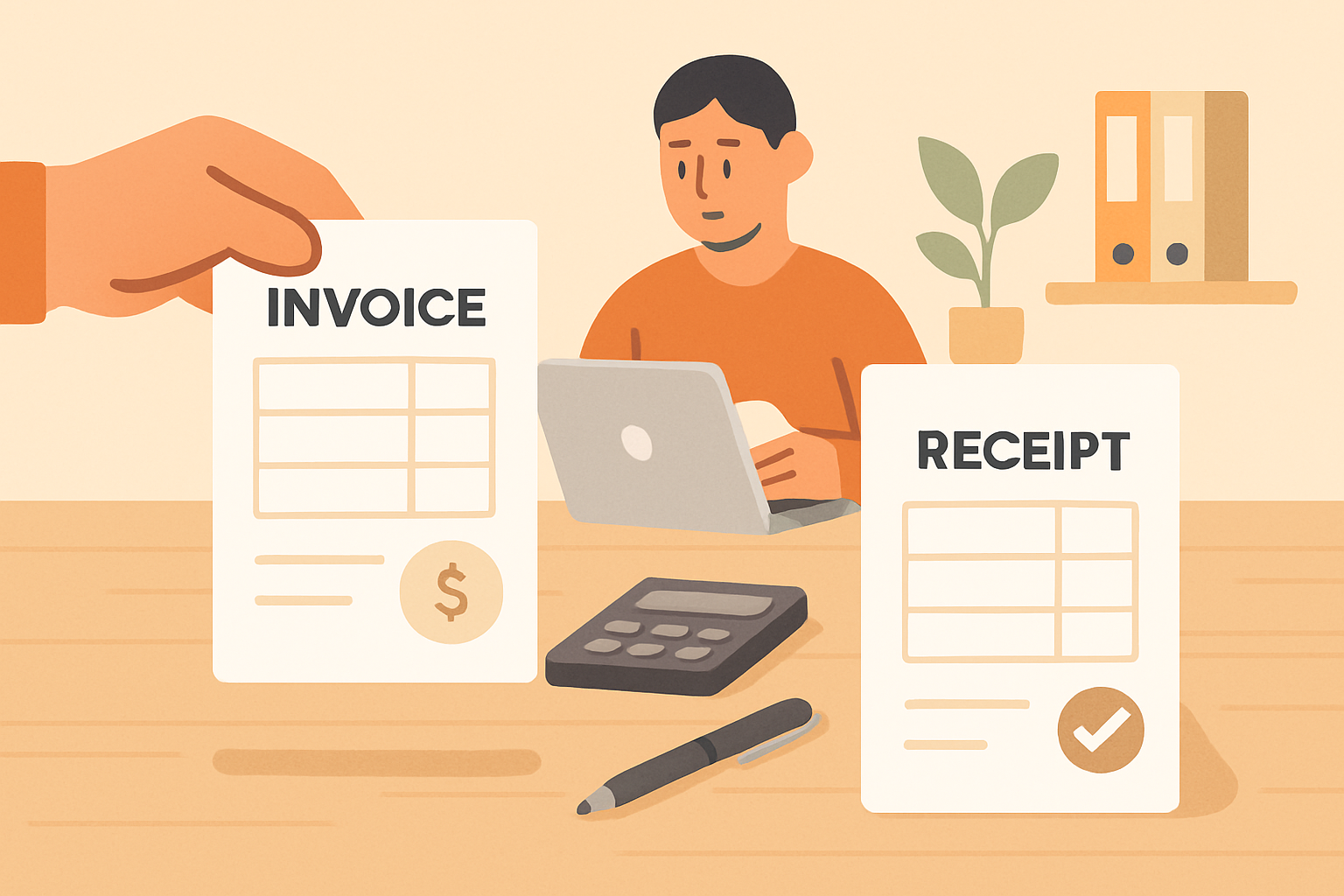
Invoice vs receipt is a common comparison, but the two documents serve different roles in the payment process. When we understand when to issue each one, we reduce confusion, improve recordkeeping, and create a smoother experience for both our business and our customers.
An invoice is typically used to request payment for goods or services, while a receipt confirms that payment has already been made. Knowing the difference helps us stay organized, support accurate bookkeeping, and communicate more professionally at every stage of a transaction.
In this article, we explain how invoices and receipts work, when to use each document, and why both matter for cash flow, customer trust, and financial clarity.
Key Takeaways
- An invoice asks for payment; a receipt confirms payment has been received.
- We use invoices before or at the time payment is due, and receipts after payment is completed.
- Clear invoices and receipts help us reduce disputes, improve bookkeeping, and support cash flow.
- Using both documents consistently creates a cleaner record for customers, accounting, and tax reporting.
What an Invoice Is and When We Use It
An invoice is the document we send to request payment for goods or services we have already provided, or are about to provide under agreed terms. It usually includes the seller and customer details, an itemized list of charges, payment terms, due date, and the total amount owed. In the invoice vs receipt comparison, the invoice comes first because it creates the payment request.
We use invoices when we need to make the billing process clear and trackable. This is especially important when we work with clients on recurring services, project-based work, or any sale where payment is not collected immediately. An invoice helps us set expectations, document what was delivered, and give the customer a formal record of what they owe.
Common situations where we use an invoice include:
- After completing work for a client who pays later
- Before delivery when payment is required in advance
- For recurring billing such as monthly services or retainers
- For partial payments on larger projects
- To support accounting records and cash flow tracking
We also use invoices to reduce confusion. A clear invoice shows exactly what was sold, how much is due, when it is due, and how the customer can pay. That makes it easier to follow up on unpaid balances and easier for customers to process payment without back-and-forth questions.
In practice, a strong invoice does more than ask for money. It helps us stay organized, maintain professional communication, and create a reliable paper trail for both sides. For teams that want to centralize billing and collections, tools like ZenInvoice can help keep invoices connected to quotes, clients, and payment follow-up in one workflow.
Invoice vs Receipt: Key Differences We Should Know
When we compare invoice vs receipt, the simplest way to think about it is timing and purpose. An invoice is a request for payment. A receipt is proof that payment was received. Both documents matter, but they serve different roles in the sales and accounting process.
An invoice is usually sent before payment. It tells the customer what they owe, why they owe it, and when payment is due. A receipt is issued after payment. It confirms that the transaction is complete and gives both sides a record for tracking and reconciliation.
- Invoice: requests payment for goods or services delivered or scheduled.
- Receipt: confirms that payment was made and accepted.
- Invoice: often includes due dates, payment terms, and itemized charges.
- Receipt: usually includes the payment date, amount paid, and payment method.
We also use these documents for different internal needs. Invoices help us manage cash flow, follow up on unpaid balances, and keep billing organized. Receipts help us verify completed transactions, support bookkeeping, and provide customers with proof of purchase.
It is important not to treat them as interchangeable. If we send a receipt before payment, we may create confusion about whether the balance is still open. If we rely on an invoice as proof of payment, we may create accounting errors or disputes later. Clear document handling reduces mistakes and makes collections easier.
In practice, the best process is to issue the invoice first, collect payment, and then send the receipt immediately after payment clears. That sequence gives customers clarity and gives us a clean paper trail.
What a Receipt Is and Why It Matters
A receipt is the written proof that payment has been made. In the invoice vs receipt comparison, this is the key difference: an invoice asks for payment, while a receipt confirms that payment was received. We use receipts to close the loop on a transaction and create a clear record for both the business and the customer.
Receipts matter because they help us verify completed sales, support bookkeeping, and reduce confusion if a customer later questions a charge. They also make returns, refunds, and expense tracking easier. For service businesses, freelancers, and small teams, a receipt can serve as a simple but important record that the work was paid for and the obligation is settled.
A strong receipt usually includes:
- Payment date
- Amount paid
- Payment method
- Business and customer details
- Reference to the original invoice or order, when applicable
We should think of receipts as confirmation, not a request. If we send a receipt too early, it can create confusion about whether payment is still due. When we issue receipts consistently, we build trust, keep records organized, and make it easier to match payments to outstanding invoices.
How We Can Use Both Documents to Improve Billing and Recordkeeping
When we compare invoice vs receipt, the most practical approach is not to choose one over the other, but to use both at the right stage of the transaction. An invoice helps us request payment, define what is owed, and set expectations before money changes hands. A receipt confirms that payment was received and gives both sides a clear record for accounting and tax purposes.
We can improve billing and recordkeeping by building a simple workflow around these two documents:
- Send the invoice first so the customer knows what to pay, when to pay, and what the charge covers.
- Issue the receipt after payment to confirm the amount paid and close the transaction.
- Match both documents to the same