Published on April 12, 2026
Small Business Invoice Template (Free Download)
Small business invoice template tips to help us bill clients faster, reduce errors, and improve payment collection.
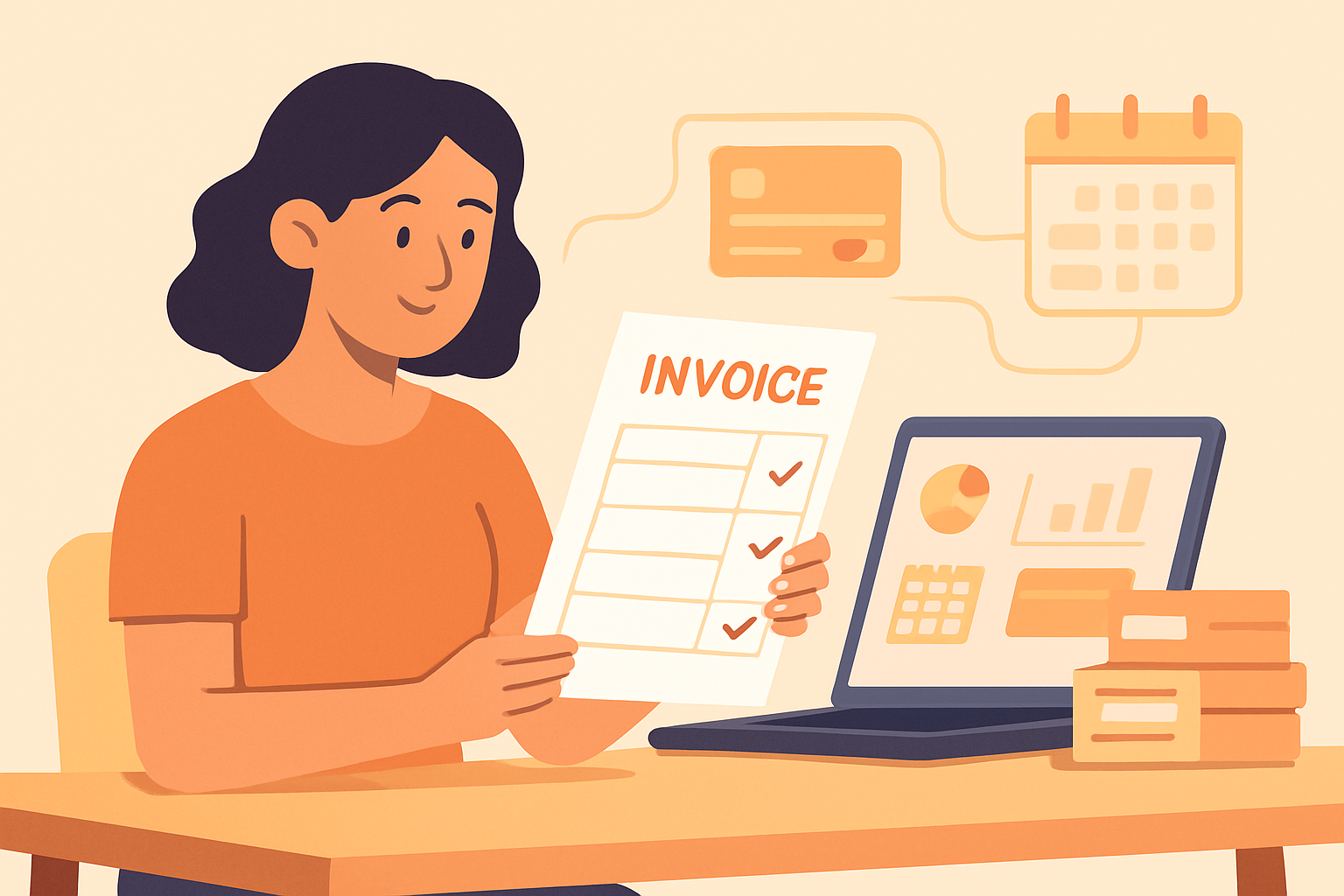
Small business invoice template is one of the simplest tools we can use to bill clients faster, reduce errors, and present a more professional image from the first invoice onward.
When we run a small business, every minute matters. A clear invoice format helps us capture the right details, set payment expectations, and make it easier for clients to pay on time. Instead of building each invoice from scratch, we can use a template to standardize our process and keep our records organized.
In this article, we’ll look at what a strong invoice template should include, how to customize it for different services, and how to use it to improve cash flow. We’ll also cover practical tips for sending invoices, tracking payments, and avoiding common billing mistakes that slow down collections.
Key Takeaways
- A small business invoice template helps us bill consistently, reduce errors, and present a more professional client experience.
- The best templates include clear business and client details, itemized services, payment terms, and a visible due date.
- Customizing invoices for each service type makes charges easier to understand and lowers the chance of disputes.
- Sending invoices promptly and following up on overdue payments can improve cash flow without adding extra manual work.
- When invoicing becomes repetitive or hard to track, it may be time to move from templates to invoicing software.
What a Small Business Invoice Template Should Include
A strong small business invoice template should make it easy for us to bill accurately, look professional, and get paid without unnecessary back-and-forth. At a minimum, it should include the details that help clients understand exactly what they owe, why they owe it, and when payment is due.
We should include our business name, logo if we use one, contact information, and the client’s billing details at the top of the invoice. This creates a clear record and helps the client route the invoice to the right person or department. We also need a unique invoice number, invoice date, and due date so both sides can track the payment timeline without confusion.
The body of the invoice should list each product or service separately with a short description, quantity, rate, and line total. This level of detail reduces disputes and makes the charge easier to review. If we charge taxes, discounts, shipping, or other fees, those should appear as separate line items so the total is transparent.
We should also include the payment total in a clearly visible place, along with accepted payment methods and any late payment terms. If we want faster payment, it helps to add a brief note such as “Payment due upon receipt” or “Net 15,” depending on our terms. For recurring work, we may also want to include the project name, service period, or purchase order number to keep records organized.
In practice, the best invoice templates are simple, consistent, and easy to customize. They should save time while still giving clients everything they need to approve and pay quickly.
How to Customize the Template for Your Services
When we customize a small business invoice template for our services, we make the document work like a clear agreement, not just a payment request. The goal is to show exactly what we delivered, how we priced it, and what the client needs to do next. That level of clarity reduces back-and-forth and helps us get paid faster.
We start by tailoring the line items to match the way we actually bill. For service businesses, that usually means replacing generic labels with specific descriptions that reflect the work performed. Instead of listing only a broad service name, we can break the invoice into tasks, hours, packages, or milestones so the client can see the value behind each charge.
What to adjust for service-based work
- Service descriptions: Use plain language that matches the proposal, quote, or scope of work.
- Billing structure: Choose hourly, flat fee, retainer, or milestone-based pricing based on how we sell the service.
- Quantity and rate fields: Show hours, sessions, units, or project phases so totals are easy to verify.
- Taxes and fees: Add any required tax, travel, rush fees, or materials charges if they apply.
- Payment terms: State due dates, late fees, and accepted payment methods in a visible place.
We also make sure the template reflects the type of client we serve. If we work with recurring clients, we can include invoice numbers, service periods, and subscription-style billing details. If we handle one-time projects, we can emphasize deliverables, completion dates, and approval status. The more closely the invoice matches the service model, the easier it is for the client to process payment without questions.
Another important step is aligning the invoice with our brand and workflow. We can add our business name, logo, contact information, and preferred payment instructions so the invoice feels professional and consistent. If we use the same format every time, we save time on admin work and create a smoother experience for clients.
Finally, we should review the template from the client’s perspective. If someone unfamiliar with the project can understand what was done, why it costs what it does, and how to pay it, the invoice is doing its job. A well-customized template supports faster approvals, fewer disputes, and more predictable cash flow.
Best Practices for Sending Invoices and Getting Paid Faster
To get the most value from a small business invoice template, we need more than a clean layout. We need a process that makes it easy for clients to understand what they owe, when it is due, and how they can pay without delay. Clear invoicing habits reduce back-and-forth, shorten payment cycles, and help us maintain steady cash flow.
Best practices that improve payment speed
- Send invoices right away. The sooner we bill after delivering work or shipping products, the sooner the payment clock starts.
- Use consistent payment terms. Terms like Net 15 or Net 30 should be easy to find and applied the same way across invoices.
- Itemize charges clearly. Break out labor, products, fees, discounts, and taxes so clients can review the invoice without confusion.
- Include multiple payment options. When we offer convenient ways to pay, clients are less likely to delay.
- Set due dates in a